

How To Keep Camera Above Motion Path Maya
xx tips to master Maya

Maya is undoubtedly an manufacture leader in the globe of 3D. Information technology has a vast array of uses and applications, and is utilised across the cosmos of characters, animation, VR and environments. Such is the extensive nature of the software, that getting the most out of its tools and features can be a daunting prospect for any creative person.
We have assembled a diverse group of artists to share their top tips for mastering Maya. These tips come from Pat Imrie, Reza Shams, Stephen Studyvin and Tsubasa Nakai. Our experts embrace a range of disciplines from academy lecturers, to CG supervisors and freelancers.
Whether y'all're looking to enhance your grapheme building, speed up your workflow, or you lot're entirely new to Maya, you are sure to notice some helpful words of wisdom in this handy feature. For more advice to help amend your 3D art, accept a look at our roundup of more Maya tutorials.
- 27 costless 3D models
01. Unload plugins for faster load times
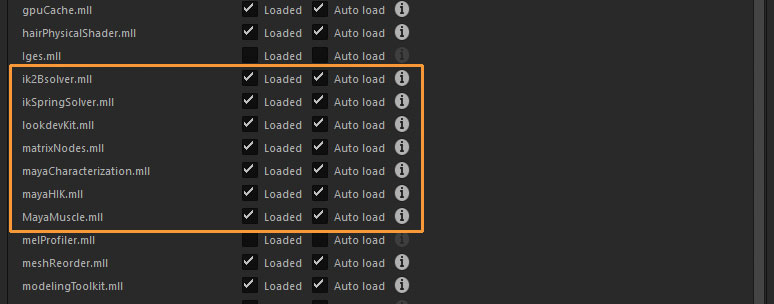
Maya provides a vast number of features for its users, simply the more than are added, the longer it can take to boot, and when on a deadline every minute counts. Get to Windows > Settings & Preferences > Plug-in Manager to find a number of roll-out menus where you lot can Load, Unload or Automobile load various plugins.
Unloading anything you lot don't need will speed up Maya'southward boot time as information technology can just skip any of the heftier features. For example, I primarily piece of work equally a modeller so I'll unload any advanced rigging options (see image) as well as FX-heavy plugins such as Bifrost.
02. Employ Soft selection options
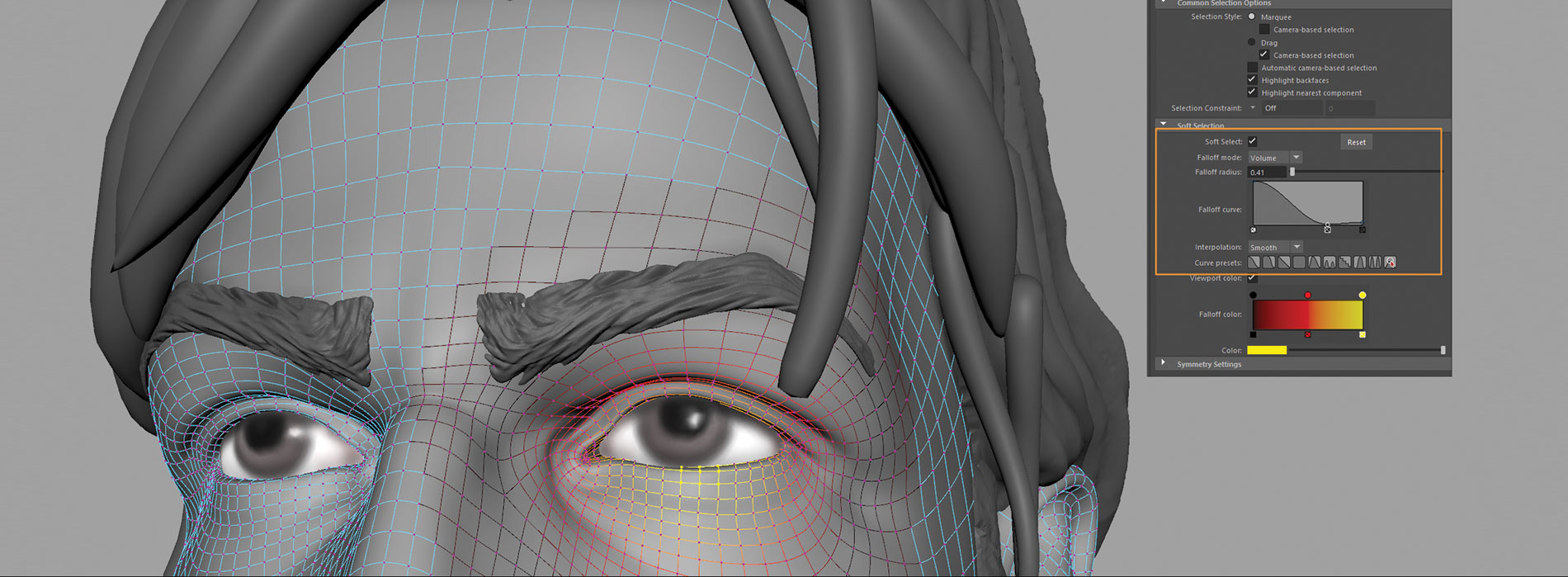
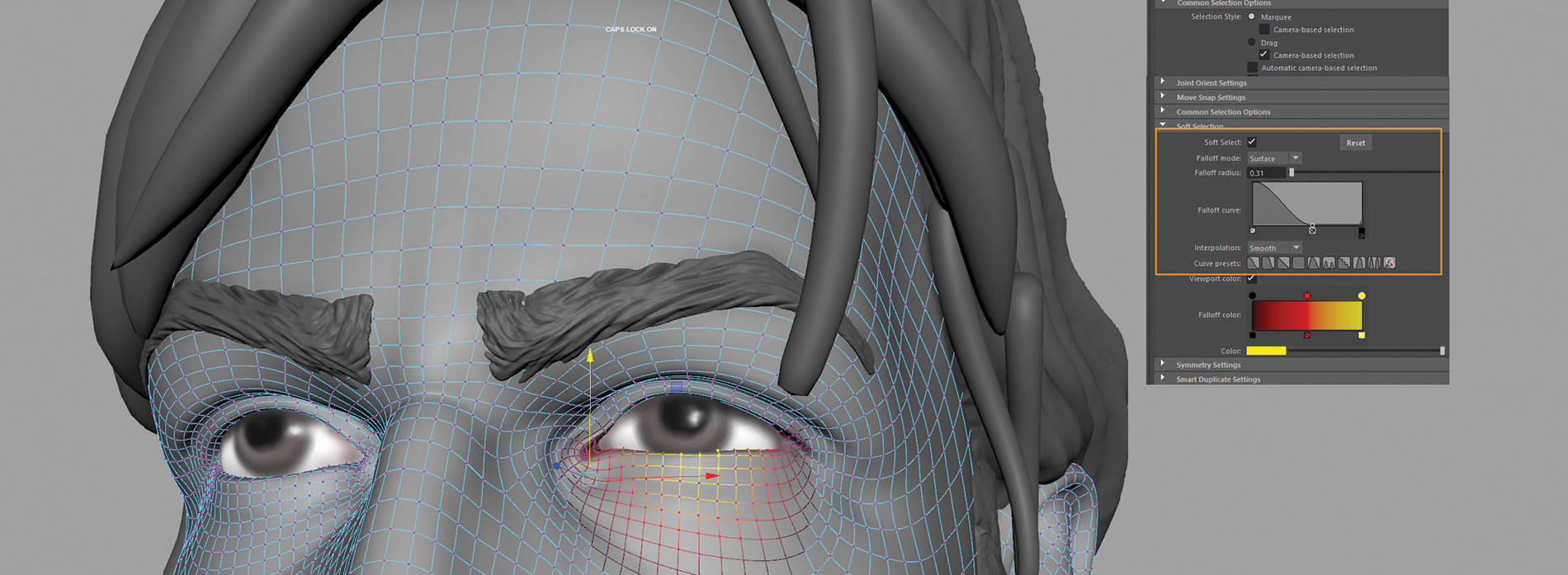
Soft Option is a well-known modelling feature accessed via the 'B' hotkey. By default it'due south a nifty tool, but information technology's worth diving into the Tool Options to proceeds more control. Changing the Falloff way from Book to Surface for instance will let better accuracy when adjusting areas such equally eyes and lips (see image).
If your model is in separate parts, setting the Falloff mode to Global will expand the falloff to the whole model. Yous can also adjust the Radius and the Curve Falloff to fine-tune your selection, which I find invaluable when creating facial shapes.
03. Endeavour the Relax Brush

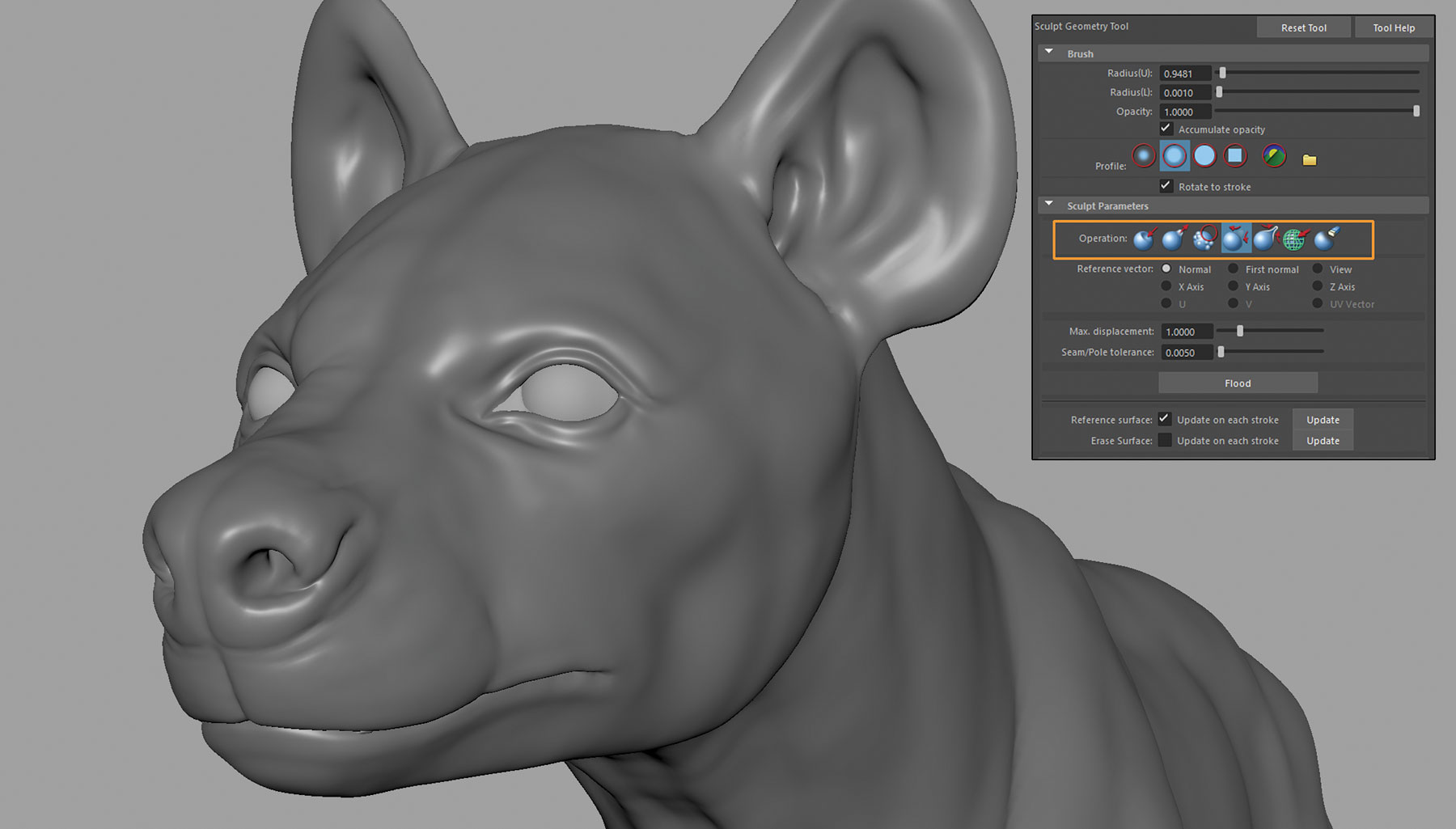
In contempo versions of Maya, sculpting tools from Mudbox have been incorporated into the toolset. For me, however, they notwithstanding don't accept the immediacy or performance of using them natively in Mudbox. This is where the Sculpt Geometry Tool comes in handy.
Found in Surfaces > Sculpt Geometry Tool, this tool has a ready of basic but applied brushes. The most useful of these is the Relax Brush, which is an excellent way to go along faces compatible while modelling, and for removing detail without losing much of the grade, which is probable to happen when using the Smoothen option.
04. Improve viewport speed with backface alternative
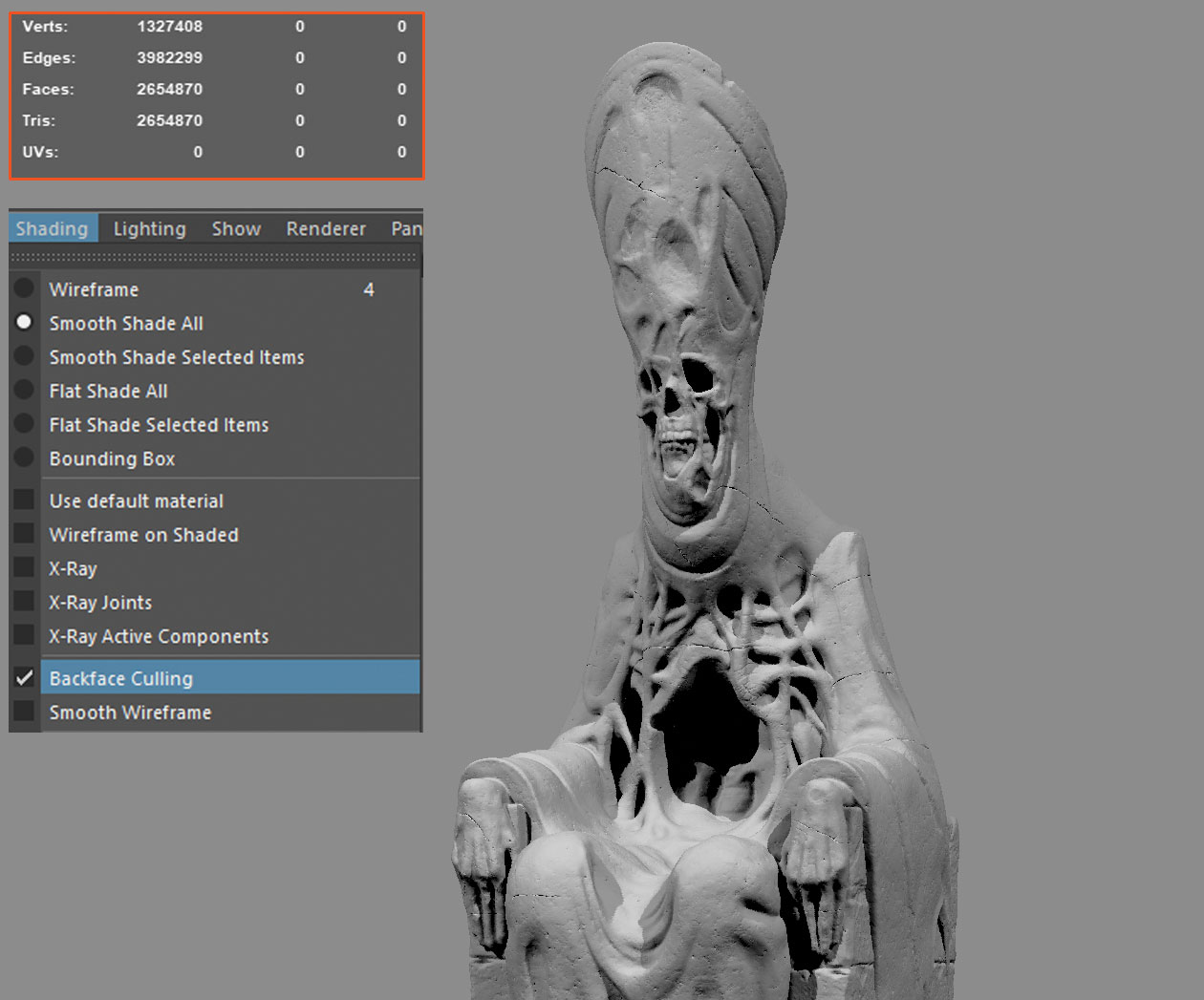
The ability to work smoothly with large data sets in Maya has improved with every new release, however, y'all volition observe that the viewport will still lag from fourth dimension to time. I mode around this is to enable the Backface Culling option from Shading > Backface Alternative – this will stop the viewport from drawing faces that are non currently facing the scene camera.
Yous tin can encounter how this improves viewport speed past going to Display > Heads Upwards Display and enabling Frame Rate, then toggle Backface Alternative on and off to see how much your viewport speed improves.
05. Edit Edge Flow
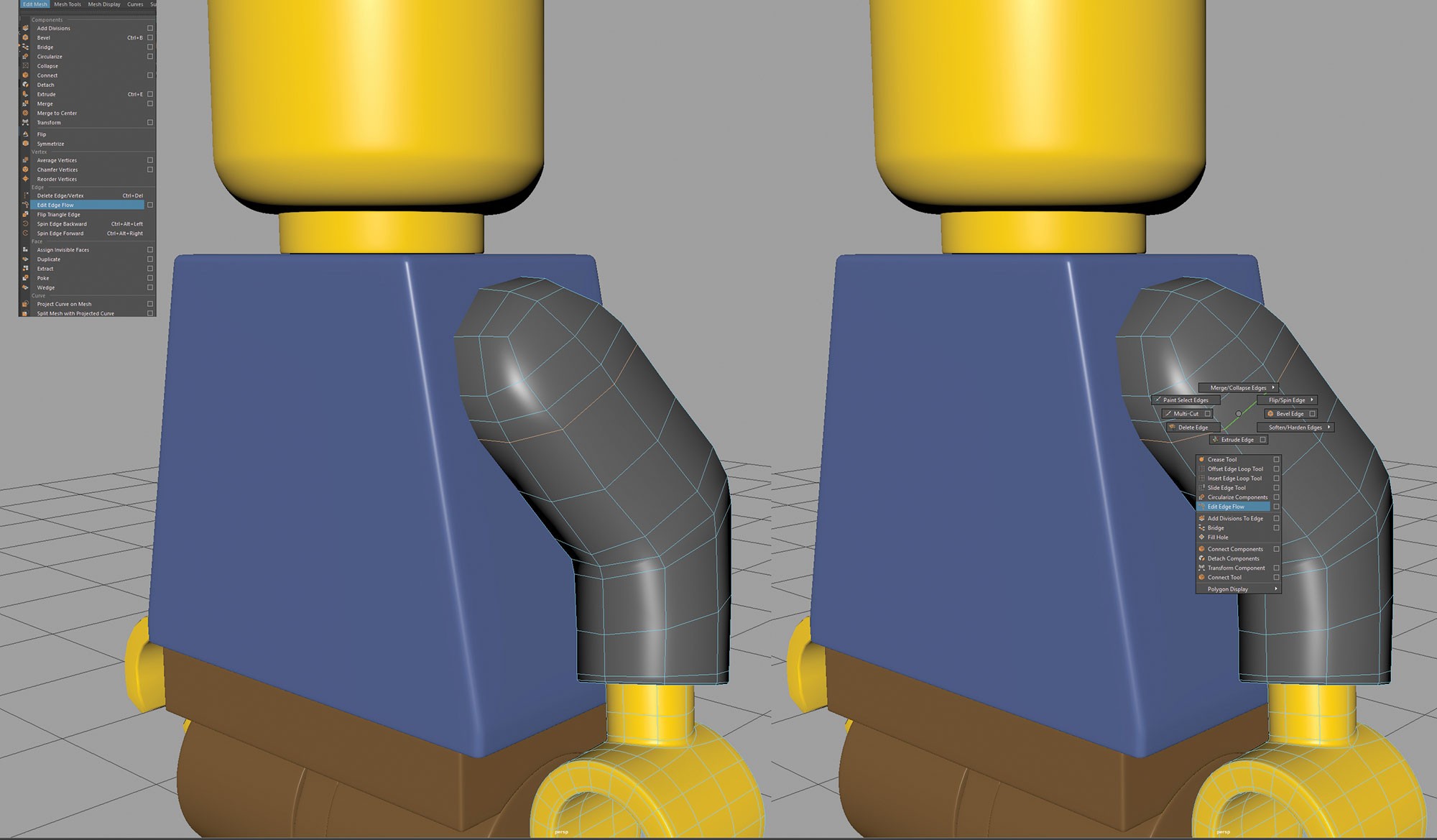
The Edit Edge Menstruation characteristic was a welcome addition to the Maya modelling toolset. Essentially it enables you to intelligently and quickly boilerplate out an inserted edge loop and so that it conforms to the form of an existing model, negating the need to edit manually and allowing yous to model quicker and more than accurately.
This is perfect for creating clean and authentic meshes, and is accessed by going to Edit Mesh > Edit Edge Period. Or, when yous have an edge loop selected, agree Shift and press the right mouse button to bring upward a marking menu with the command available at the bottom of the card.
06. Create a custom UI
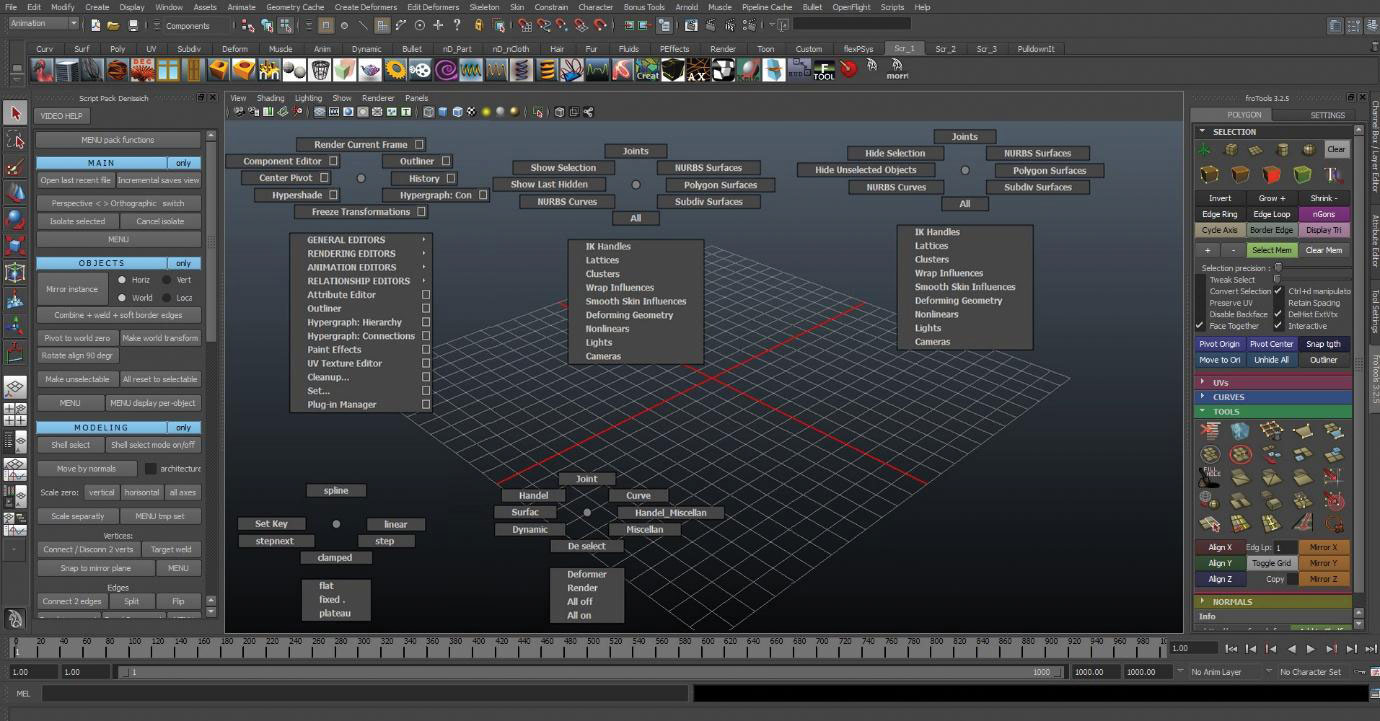
Make a custom marking carte and custom hotkeys – it'll speed upwards your piece of work and y'all'll take piece of cake admission to the tools. Arrange the Maya Shelves according to your gustatory modality and add together whatsoever tools you're going to demand to them. This method enables you to quickly admission the commands in the menus on the shelves. You tin fifty-fifty create new icons for tools, changing Maya to adjust your taste.
07. Make utilize of the camera rig
Utilise the photographic camera rig for animation and motion in your scenes. This is the best mode to control the camera in 3D scenes. You can rig any type of camera, with and so many options for decision-making it bachelor.
08. Use low-poly for speedy retopology
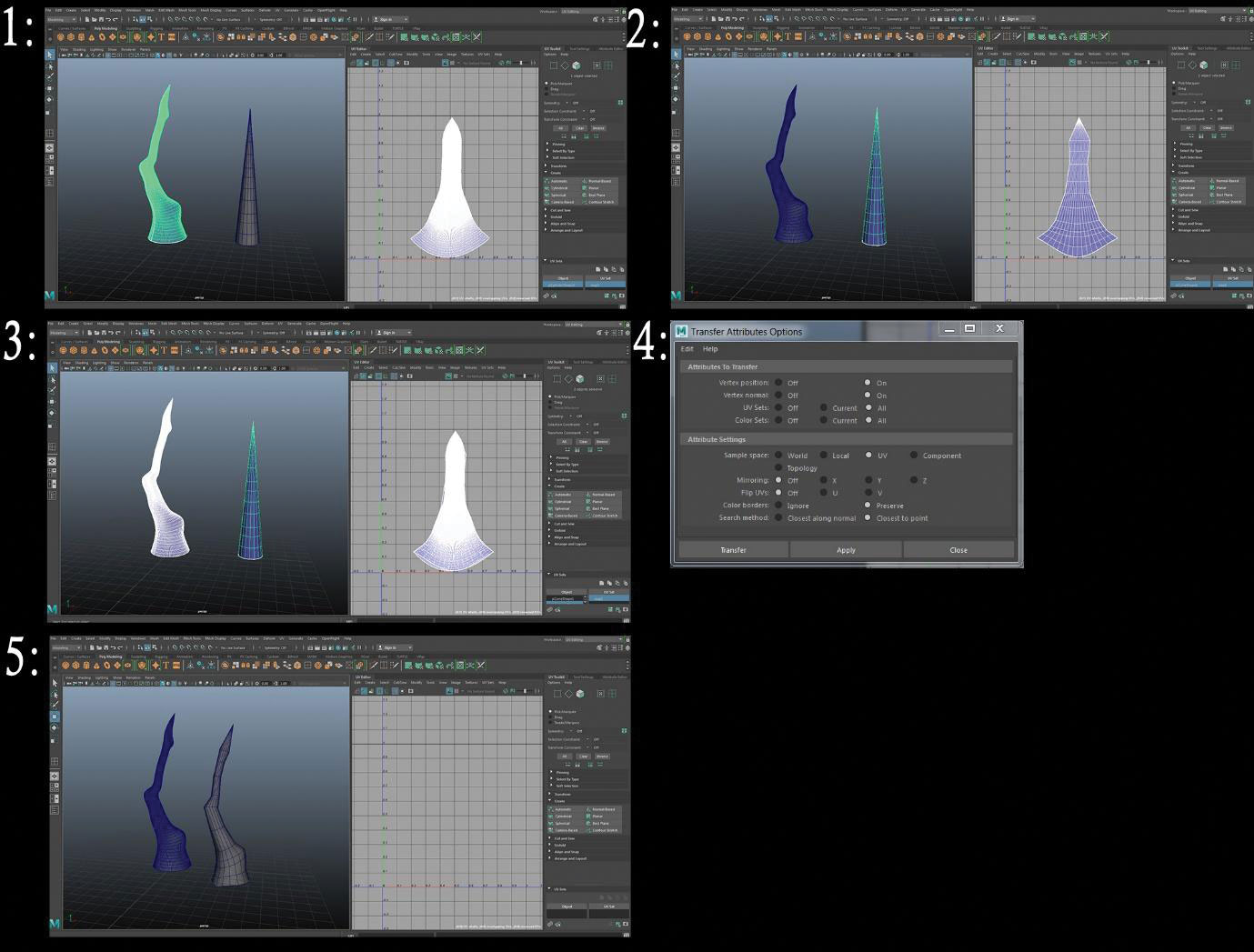
Endeavour this tip for speedy Retopology. Import your high-poly model then create a low-poly primitive object that resembles the high poly. Edit and resize the low-poly object UVs to make them like the loftier-poly model, and so delete the history and freeze transform the low-poly object.
Select the high-poly and so low-poly mesh and go to: Mesh > Transfer Attributes. Finally, edit Transfer Attributes equally seen in the screenshot.
09. Create a low-poly tree
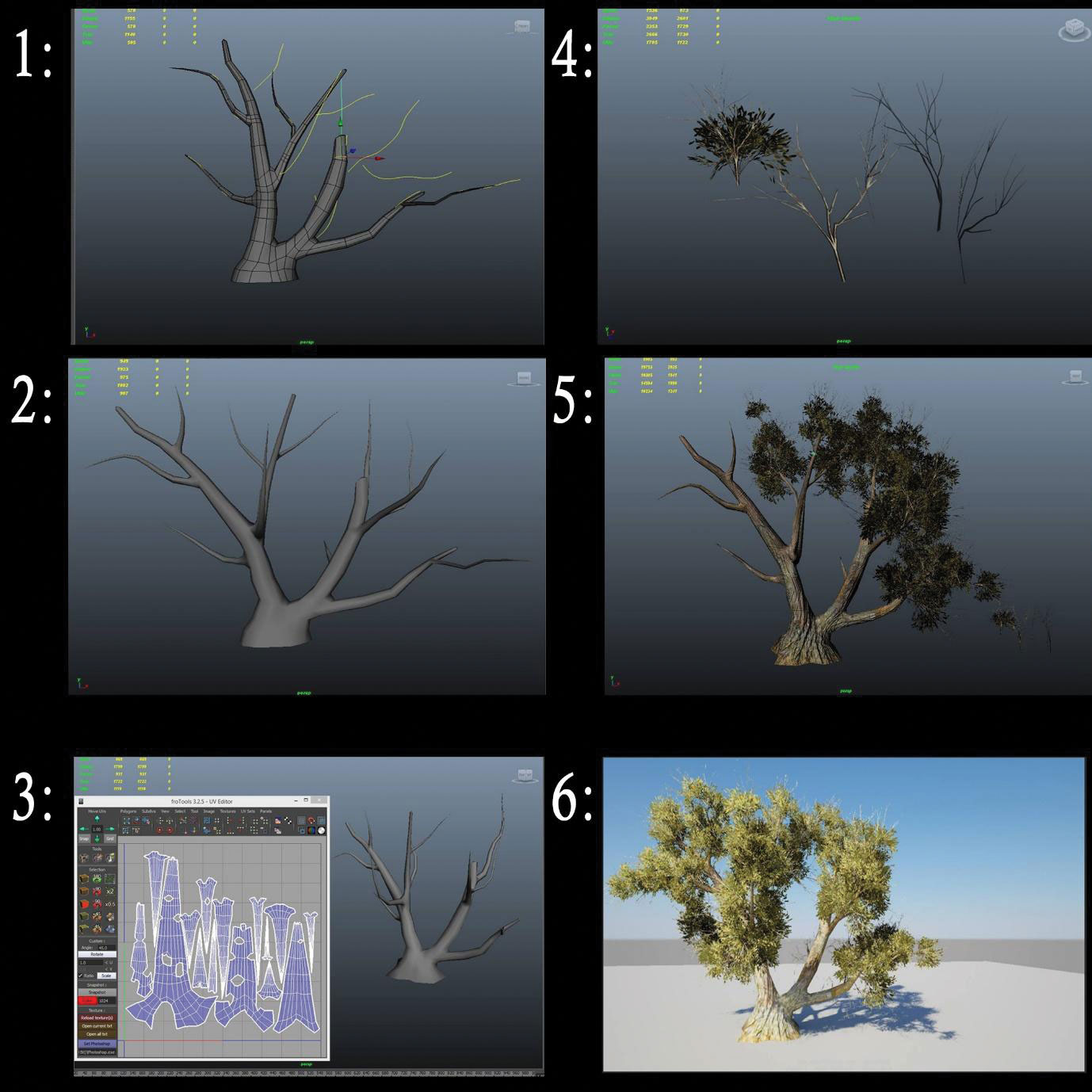
Create a circle and some curves, and then extrude the circle on the curves and deform it. Create a UV for the trunk. Create a depression-poly plan and assign some co-operative texture with alphas set up to transparency. Make the tree body live and add together branches.
10. Tackle complex shapes
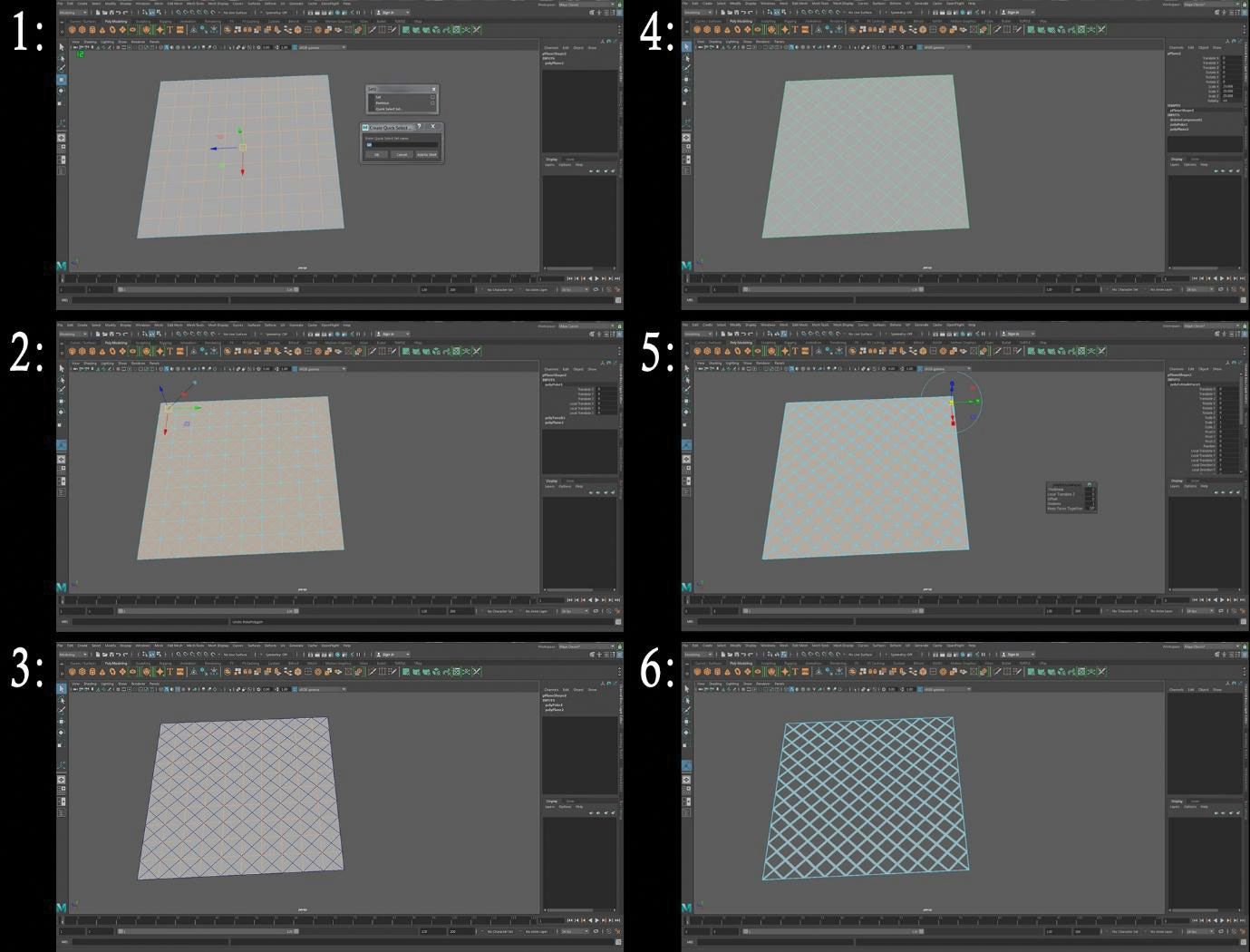
Create a program and 10 subdivisions in width and top, and so select the inner edge and go to Create > Sets > Quick Select Prepare. Select all of the faces and go to Edit Mesh > Poke. Go to Select > Quick Select Set > Set, and delete the edges. Finally, delete the selected face.
11. Organise your files properly
Maya uses a folder structure to organise project files, keeping all the files associated with the project in ane directory. When opening a scene associated with a Maya project, and specially when switching between projects, set the project folder first before opening the scene file.
Simplify setting projects by opening Maya first, then choose File > Open up Scene. In the Open up window, click Ready Projection to open up the Ready Project window. Choose the project directory, click the Set push button, then open the scene file from the Open window later the Gear up Projection window closes.
12. Prepare up a Maya project directory
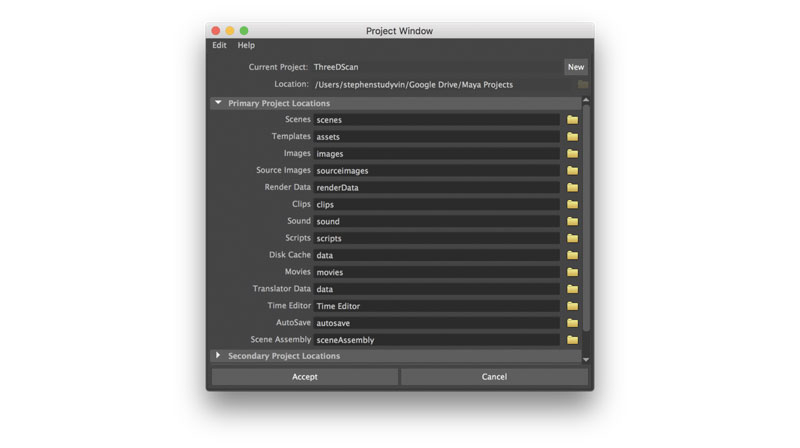
Maya keeps track of all files associated with a scene in a project directory. In some cases, working with a single file without a project directory will work, but whatsoever associated files with the scene should be kept in a Maya projection directory. If the project directory is set, Maya will look for all scene files, Maya ASCII or Maya Binary files, in the scene's directory.
Paradigm files used as textures placed in the sourceimages folder will exist automatically located when the scene file opens. Rendered images, or maps generated, will be stored and saved in the images directory.
xiii. Use resolution gate to etch final return
Turn on the Resolution Gate to brandish a guide in the main viewport that represents the terminal rendered surface area. The Resolution Gate is displayed equally a framed expanse in the main viewport which will be the same camera framing as the final rendered paradigm. The rendering resolution height and width are displayed in the masked expanse above the Resolution Gate in the viewport when the resolution gate is agile. The name of the camera is also displayed in the masked portion below the gate mask. The resolution settings are set in the Epitome Size section of the Return Settings window.
14. Use hotkeys to set Animation Keyframes
You tin set up a keyframe on an object, camera or light past selecting it and pressing S on the keyboard. This sets a keyframe on the selection at the frame indicated on the timeline, for the attributes displayed in the Aqueduct Box. Unremarkably the current position, rotation, scale and visibility are available in the Aqueduct Box. Yous can set keys on specific attributes by selecting the channels to fundamental, right-clicking on whatsoever of the selected labels in the Aqueduct Box, and and so choosing Key Selected from the carte du jour.
xv. Create a shot camera for blitheness
When Maya opens a new scene several default cameras are created. One photographic camera is the default perspective view that is used to look around the scene, named persp. While this camera can be used for terminal rendering, it is non all-time when animative with camera movement that requires keyframes on the camera. Using keyframed cameras to look around the scene will popular back to the keyframes locations when scrubbing on the timeline. Add a new photographic camera for rendering and keyframing by going to Create > Cameras > Camera.
16. Make ornaments with Flow Path Object
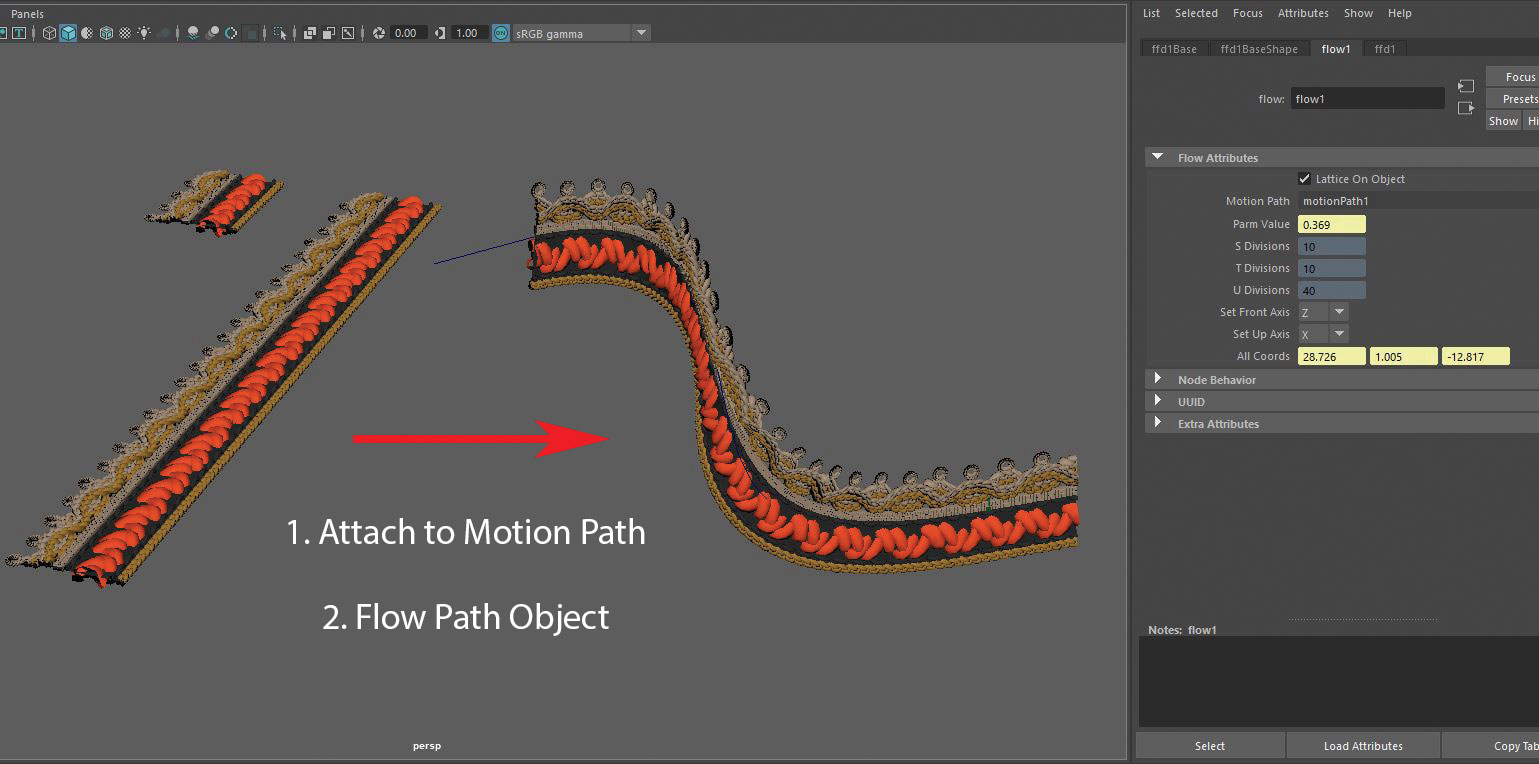
When making something repeatable like an ornamentation or stitch pattern, use Attach to Motion Path and Menstruum Path Object in Maya. These are very useful for scattering many detailed objects across a circuitous surface.
17. Create natural Hair with XGen
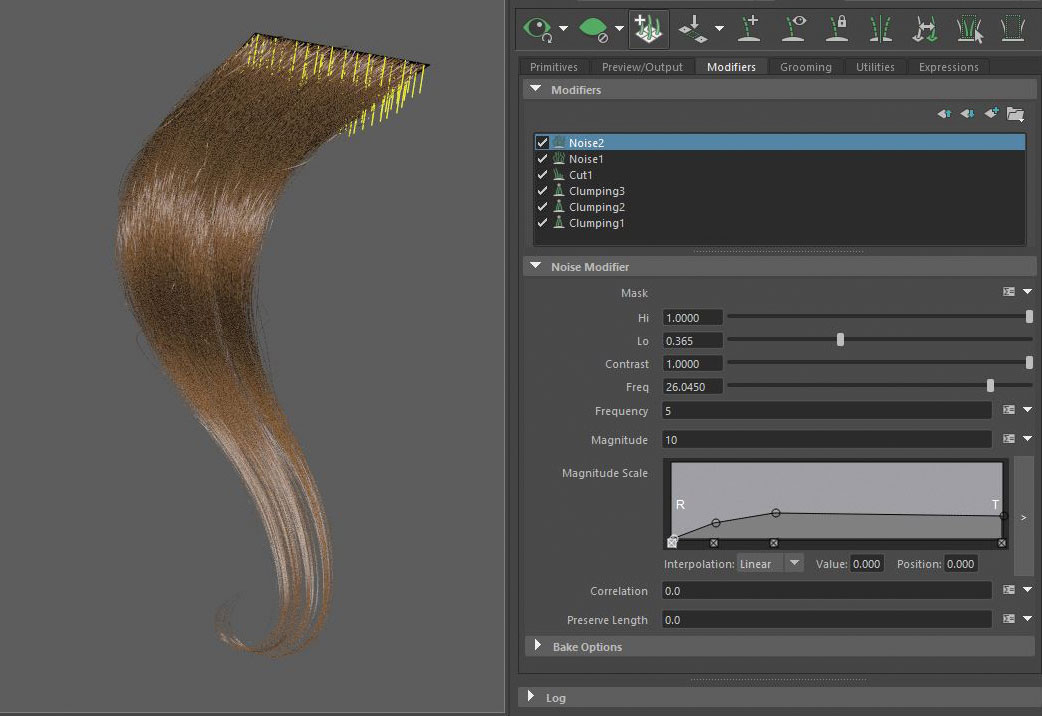
Yous tin make beautiful hair with few guide curves if yous can use XGen modifiers. Outset by making hair from guide curves with XGen. Create a clumping modifier to clump a big packet of pilus, then create a 2nd clumping modifier to clump a medium bundle of hair, followed by a third to dodder a small bundle of hair. Making a cut modifier will help y'all achieve natural tips of hairs. Lastly, create a noise modifier to obtain a natural pilus stream and frizz.
18. Employ procedural nodes for face texture
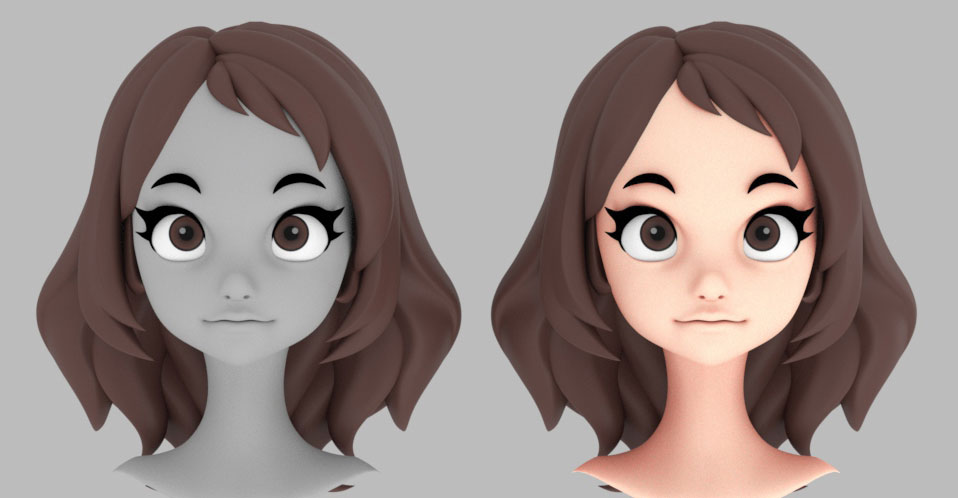
Make face textures with only procedural nodes considering they're piece of cake to brand and reuse, plus gradation is beautiful. First, construct the shader tree earlier blending the textures with the layered texture node. You tin can find the best look by adjusting the Alpha amount. Connect the layered texture to SubSurface Color, and adapt the skin shader to look like the epitome.
19. Employ guide curves for stylised hair
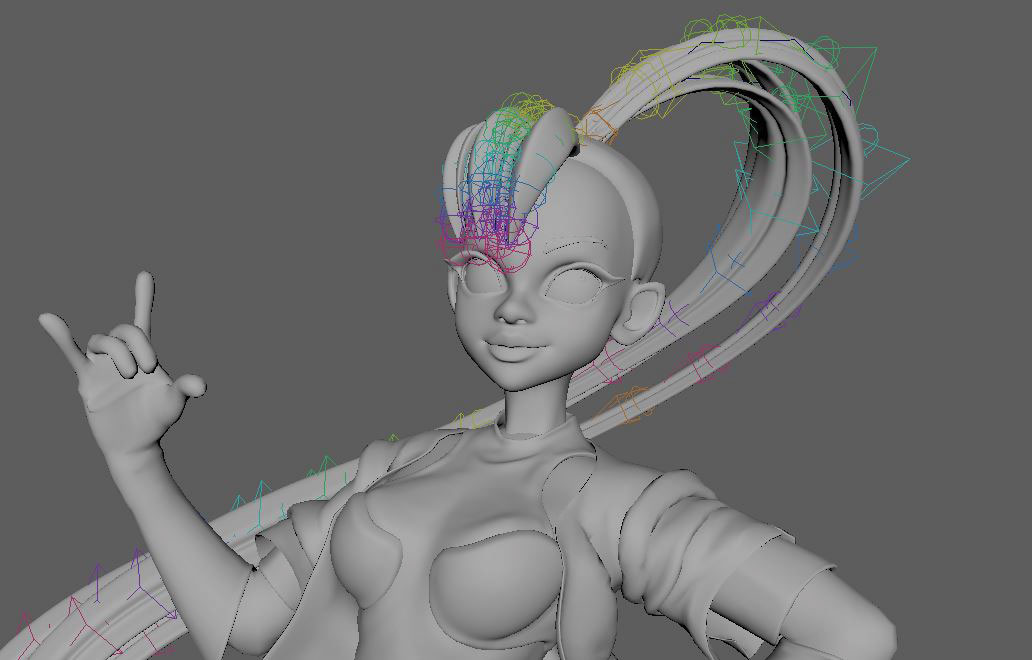
This tip is useful for creating guide curves for a stylised character's pilus. Create the base of operations pilus, but be sure to make holes on both ends to extract the curve from the mesh. Next, create some joints and apply a spline IK handle to deform hands, then skin using them. Scatter hair objects on the head with a spline IK handle. Next, excerpt curves from the mesh.
Finally, you have to arrange the directions, select the opposite direction'south curve, and select Curves > Reverse Direction. With this method, you tin make guide curves as you lot blueprint.
20. Try Cryptomatte for look development
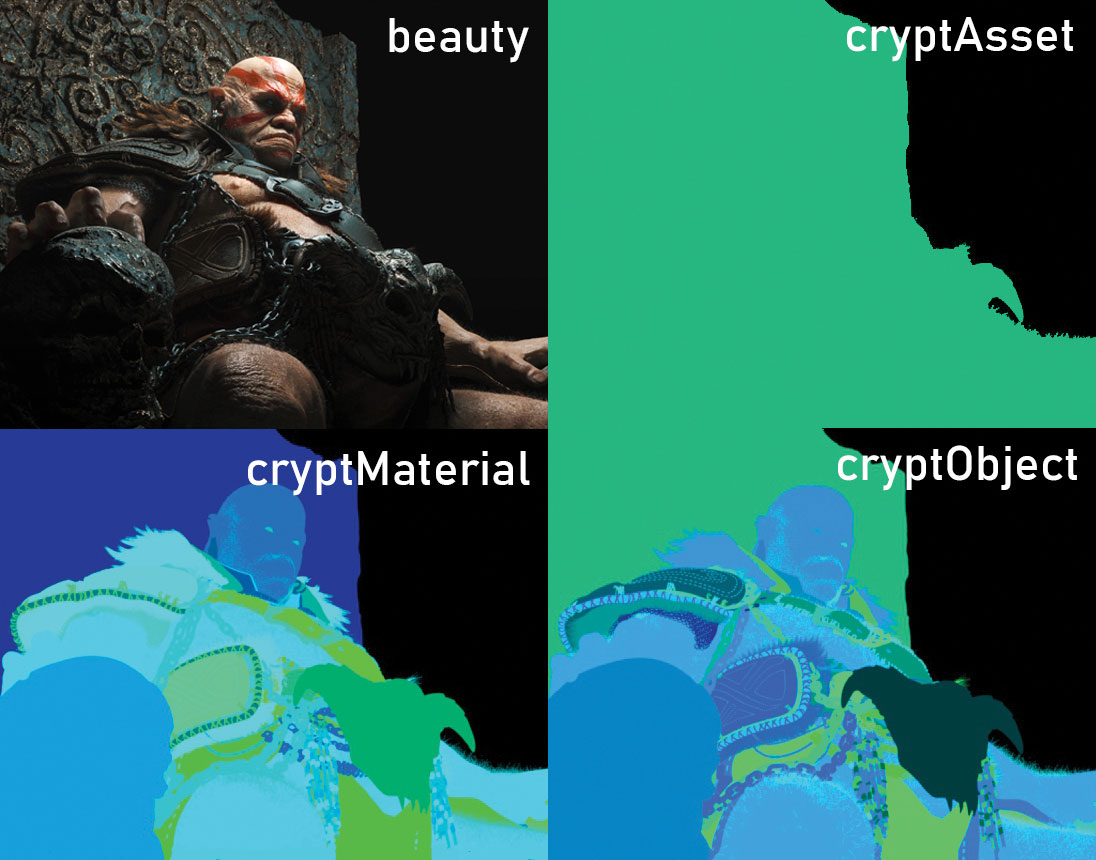
Cryptomatte is an ID matte creation tool created by Psyop, it creates ID mattes to do look development or final adjustments automatically. After installing, create the Cryptomatte AOVs in Render Settings. Select an AOV and view it in the Attribute editor. It should exist visible in the Shader under Custom AOV. You can export 3 ID mattes to follow demand object, material, asset. You may find it useful to make big changes in Photoshop or Nuke using the ID mattes, this will assistance find a new look when you're stuck with an image. This tip is especially useful when you're on tight deadlines and need something new quickly.
This article was originally published in 3D World , the world'south best-selling magazine for CG artists. Buy issue 241 or subscribe .
Read more than:
- Acquire how to model a 3D portrait in ZBrush and Maya
- Become a better 3D artist
- The best new 3D tools for 2019

Cheers for reading 5 articles this calendar month* Join now for unlimited access
Enjoy your first month for just £1 / $one / €1
*Read 5 complimentary articles per month without a subscription
Join now for unlimited admission
Endeavor first month for only £1 / $1 / €one
Related manufactures
Source: https://www.creativebloq.com/advice/20-tips-to-master-maya
Posted by: hardwickwhin1969.blogspot.com
0 Response to "How To Keep Camera Above Motion Path Maya"
Post a Comment